AI Summary
With the advancement of AI, the role of PM/PO is transforming from requirement gatherers to ‘builders’ who directly implement products. Consequently, the core competencies are shifting towards strategic planning, decision-making, and rapid prototyping using AI, based on a solid understanding of technology. Ultimately, PM/POs in the AI era are evolving into forward planners who turn ideas into actionable forms rather than just documents.
Hello, today we have one of the hottest CPOs around!
Here's a summary of my thoughts after listening to Mike Krieger's podcast.
In the IT industry, the roles of Product Managers (PMs) and Product Owners (POs) have been constantly evolving. Their roles—understanding market needs, defining requirements, and collaborating with development teams to launch products—have been the core drivers of product success.
However, the recent rapid advancement of AI is demanding a fundamental transformation unlike any previous change. Now, PM/PO must transcend the role of simply drafting requirement documents as planners and instead become ‘builders’ and ‘frontline planners’ who directly construct products based on technical understanding and leverage AI agents to swiftly turn ideas into reality.
There is a leader at the forefront of AI who is directly experiencing this transformation.
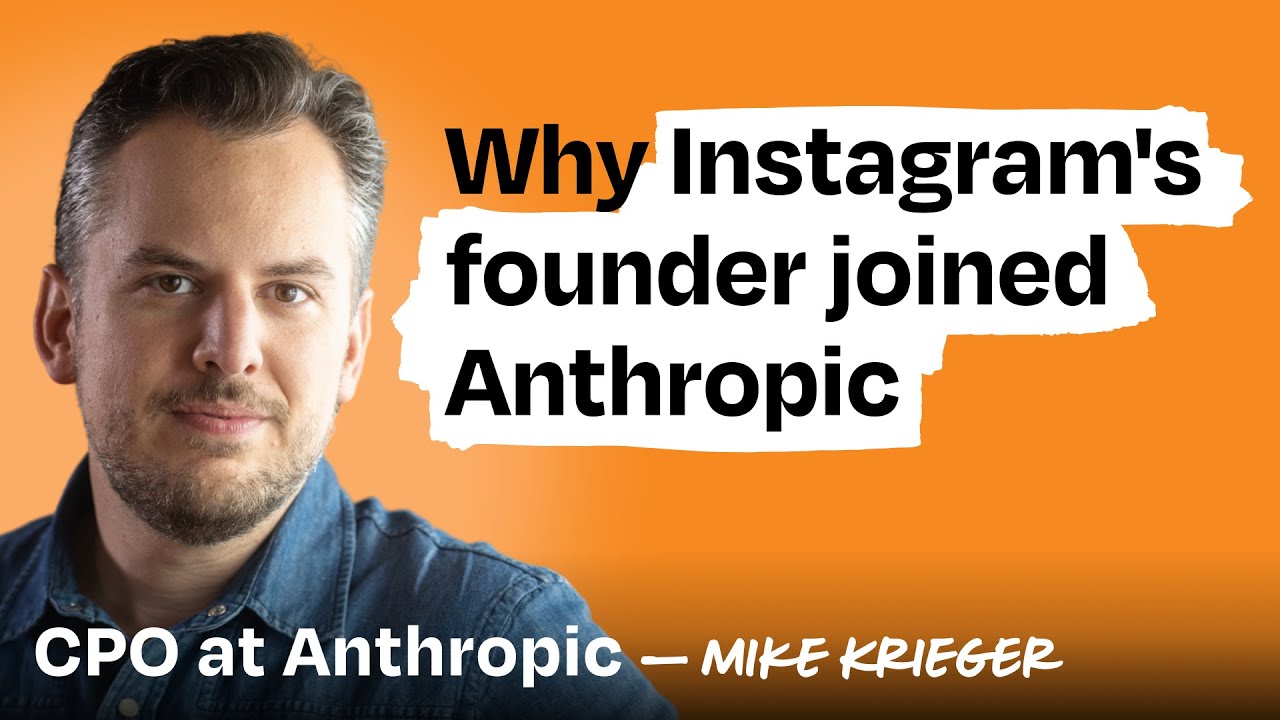
Mike Krieger, co-founder of Instagram and current Chief Product Officer (CPO) at Anthropic, recently shared deep insights into the current state and future of product development in the AI era, as well as the evolving role of PM/PO, during a podcast interview. Through his experiences, we will explore the new competencies required of PM/PO in the AI era.
A world where AI writes 90% of the code: A fundamental shift in development methods
Mike Krieger shared the astonishing reality that “90% of the code is written by AI” within Anthropic. This figure, which was hard to imagine just a few years ago, vividly illustrates how rapidly AI is advancing and how much of development is already being automated by AI.
This change has a significant impact on traditional product development workflows. In the past, the typical process involved a PM writing a requirements document and passing it to engineers, who then wrote the code and implemented the product. However, code writing itself is no longer a bottleneck.
New PM/PO Capabilities: From Planner to ‘Builder’
How should the role of PM/PO evolve in an environment where AI can quickly generate code? Mike Krieger highlighted the increasing trend of PMs or designers using AI to directly create functional demos or prototypes as the most significant change.
This means that instead of merely describing ideas in documents, it is now possible to show tangible results and say, “This is exactly what I had in mind.” It is now possible to have AI agents (such as Claude) generate code, create UI elements, and implement basic functions. This significantly accelerates the prototyping stage and enables the sharing of planning intentions much more quickly and accurately.
However, it is important to note that knowing “what to ask AI,” “how to structure questions,” and “how to understand system architecture and structure changes between the backend and frontend” still requires specialized skills and an engineer's way of thinking. AI is a powerful tool, but guiding it in the right direction and integrating the results remains a human role.
Changing Bottlenecks and New Areas of Focus for PMs
As the code-writing bottleneck was resolved, new bottlenecks emerged. Mike Krieger pointed out higher-level bottlenecks such as “decision-making and team coordination” and lower-level bottlenecks such as the “merge queue” for actually reflecting code in production.
This means that the role of PM/PO should focus more on the strategic planning stage of deciding “what to build” and coordinating various stakeholders, as well as safely and efficiently launching and managing the finished product.
Furthermore, Mike Krieger emphasized that the true value of product teams in the AI era comes from three areas:
Making it all understandable (Comprehensibility):
The ability to design UX/UI that simplifies the complexity of AI tools and helps users easily leverage their power. Deep empathy for human needs and psychology is crucial.
Strategy:
The ability to decide which products to create, where to compete, and how to win in the market among countless possibilities.
Opening eyes to possibilities:
The role of bridging the gap (overhang) between what AI models and products can do and how users typically use them.
The era of “front-end planners”: Similarities with the Palantir model
These changes are similar to the way Palantir divides its work into a “front-end developer organization” that experiments with and explores the latest AI technologies, and a “back-end developer organization” that implements actual products based on those technologies.
In the AI era, PM/PO must act as ‘front-end planners’ who interact directly with AI models at the forefront of technology to explore new possibilities and quickly implement ideas into prototypes using AI agents. This role goes beyond simply conveying ideas through documents; it is closer to that of a ‘builder’ who holds the powerful tool of AI in their hands and directly combines materials to create new forms. Mike Krieger's emphasis on “the power of supporting entrepreneurs/technical leaders with ideas to help them realize their ideas” is in the same vein.
New Attitudes Required for PM/PO in the AI Era
So, what attitudes and capabilities are needed for these “builders of the AI era”?
Technical curiosity and exploration: It is necessary to understand how AI models work and their limitations, and to continuously explore the changes that new technologies (such as MCP) will bring. The ability to effectively ask questions of AI, critically review results, and access necessary information becomes crucial.
Independent Thinking and Problem-Solving Skills: While AI is a powerful partner, defining problems and setting the direction for solutions remains the human's responsibility. Rather than delegating thinking to AI, we must build a partnership where AI enhances human thinking.
Value-centered thinking: Beyond traditional engagement metrics (such as usage time and frequency), we must focus on the actual value that AI products provide to users and how efficiently they help users complete tasks. Efforts are needed to measure qualitative, outcome-oriented values such as “Are people able to exercise their creativity and gain more leisure time through AI?”
Constant experimentation and iteration: AI models evolve rapidly, and what is possible cannot be known without direct experimentation. It is important to build a repeatable process that tests the limits of the model, learns from failures, and quickly incorporates user feedback.
Conclusion
The AI era presents both challenges and tremendous opportunities for PMs/POs. They must evolve from being mere planners and document creators to becoming “builders” and “forward-thinking planners” who leverage AI based on technical depth to quickly realize ideas and deliver real value to users. As Mike Krieger, CPO of Anthropic, says, by embracing this change, continuously learning, and exploring new ways of collaborating with AI, you can become a key player in the success of products in the AI era.
We support your journey as PM/PO in the AI era!
✍ ChainShift Chris
Reference:
https://www.youtube.com/watch?v=DKrBGOFs0GY
© 2025 ChainShift. All rights reserved. Unauthorized reproduction and redistribution prohibited.