AI Summary
The key performance issue in utilizing AI is not the model itself, but rather the phenomenon of ‘Capability Overhang’ which arises from a lack of proper prompt design. To address this, it is crucial to establish a plan before execution and employ a structured prompting approach involving review and feedback loops. Ultimately, the developer is shifting from being just a code writer to becoming a facilitator of AI's thought and execution.
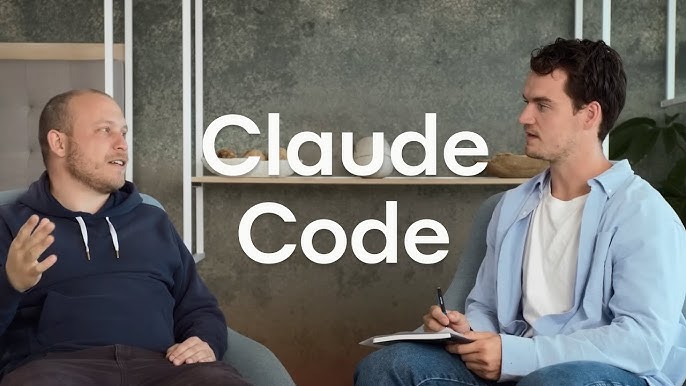
Today, I would like to share some materials that our team studied while developing the AEO and GEO service ChainShift. Entropic's tech engineer Boris Cherny's insights on the topic of “Mastering Cloud Code in 30 Minutes” provided us with many insights into development methods using AI.
Let's get started!
Generative AI is advancing day by day. While the latest models like Claude and GPT already have the capability to solve many problems, there are times when we don’t get the results we want. The reason is simple: even though the model’s capabilities are sufficient, without the right prompt, it can’t fully utilize those capabilities.
This phenomenon is referred to as “Capability Overhang.” It's akin to having a high-performance engine but failing to accelerate because the driver isn't pressing the accelerator properly.
Start with the request: A simple yet powerful principle
So, how can we solve this problem? The answer is surprisingly simple. “Don't execute immediately; first, ask it to think.”
In practice, many users directly request Claude with phrases like “Implement this feature” or “Write this code.” However, when you entrust the model with a complex task all at once, the likelihood of unintended results increases accordingly.
On the other hand, if you request, "First, outline the approach to solving the problem step by step. Don’t write the code yet.” In this case, Claude analyzes the situation, presents various options, and starts with planning. This process is not just code automation but a collaborative effort of thinking and designing with AI.
Claude Prompting Strategy in 3 Steps
This thinking-centric prompting approach is a core strategy for utilizing Claude much more effectively. Specifically, it follows these three steps:
1. Request a plan
The first step is to ask the model for a strategy to solve the problem rather than immediately requesting code. For example, you might say, “What approaches are possible to solve this problem? Please organize your ideas step by step.” Based on this request, Claude will suggest various approaches and analyze the problem from different perspectives.
2. Review and select the plan
The next step is to select or combine the most appropriate approach from the plans Claude has proposed. The user can clearly instruct, “Let's try combining options 1 and 3,” and Claude will proceed with the next task according to that request. In this process, the user reviews the AI's thought process and adjusts its direction.
3. Create a feedback loop
The final step is to create a verifiable loop for the written code or work results. For example, requests such as “Write a unit test for this code” or “Take a screenshot of the results and show them to me” fall under this category. Claude can derive much more refined results within a structure that allows it to evaluate and improve its own work.
The Power of Repeatable Feedback Loops
Claude's performance becomes much more powerful when used with tools that can verify the results. When given methods to obtain “visible results,” such as unit tests, Puppeteer screenshots, or iOS simulators, Claude can leverage its ability to iteratively revise and improve based on those results.
This loop-based improvement approach creates a true collaborative AI development environment that goes beyond simple automation.
Encouraging Thinking: Claude's Essential Usage
Anthropic's philosophy is very clear: simply telling Claude in natural language to “think about it,” “plan it out,” or “don't execute yet” is sufficient. The fact that you can guide the model into a thinking-centric flow using only natural language, without any special mode switches or settings, demonstrates the true power of prompting.
The Changing Role of Developers: From Coding to Orchestration
Developers are evolving from coders to orchestrators of AI agents. The amount of code written directly is decreasing, while the importance of leveraging the model's capabilities, reviewing results, and setting direction is increasing.
Code writing → Code review and debugging
Feature design → Problem definition and strategy setting
Programming → Setting up a collaborative environment with the model
This shift is not merely a change in tools but a fundamental transformation in how we work.
Final Advice: Models Follow Your Instructions
Capability Overhang is not a problem with the model; it is a problem with how we construct prompts. Understanding what AI can do and employing prompting strategies to maximize its capabilities has become the new competitive edge for developers in this era.
By adhering to the “plan – execute – review” structure, the model will deliver significantly higher-quality results.
✍ ChainShift Daniel
Reference:
https://www.youtube.com/watch?v=6eBSHbLKuN0
© 2025 ChainShift. All rights reserved. Unauthorized reproduction and redistribution prohibited.